Happy Aphelion Day, what? Earth is farther from the sun than any other day of year
ST. GEORGE — It’s “Happy Aphelion Day,” an annual event when the earth is at its greatest distance from the sun, which may be surprising to Southern Utahns with triple-digit temperatures scorching the region Friday.
Earth’s annual orbit around the sun carried it to its furthest point from its star, its aphelion, Friday at 10:46 MDT, according to Space.com. At that moment Earth was more than 94.5 million miles from the sun, which is about 1.5 million miles farther than the third planet’s average distance, or twice as far away as it was Jan. 3 during the perihelion, when Earth was closest to the sun. That is about a 2 percent difference in distance, an inestimable amount in the cosmic scheme of things.

Consistent with all planets in the solar system, Earth has an elliptical, or oval, orbit around the sun that is located 1.5 million miles off-center.
As such, all planets have a point where they are closer to the sun, or the perihelion, and a point of farthest approach, the aphelion.
The aphelion typically falls two weeks after the June solstice, which marks the first day of summer on the Northern Hemisphere and winter on the Southern Hemisphere.
Johannes Kepler, a 16th century mathematician, was the first to discover that the orbits of the planets were ellipses, or oval-shaped paths the planets take around the sun, according to an information sheet published by the University of Oregon.
Kepler also concluded that orbiting objects sweep out equal areas in equal times, so they are faster at perihelion and slowest at aphelion.
There will be no noticeable difference here on Earth, as NASA scientists say that seasons are “shaped primarily by the 23.5-degree tilt of the planet’s spin-axis and not by the mild eccentricity of Earth’s orbit,” George Lebo, an astronomer with NASA’s Marshall Space Flight Center in Huntsville, Alabama, said in a 2001 interview – the year Kepler’s defined aphelion fell on the Fourth of July.
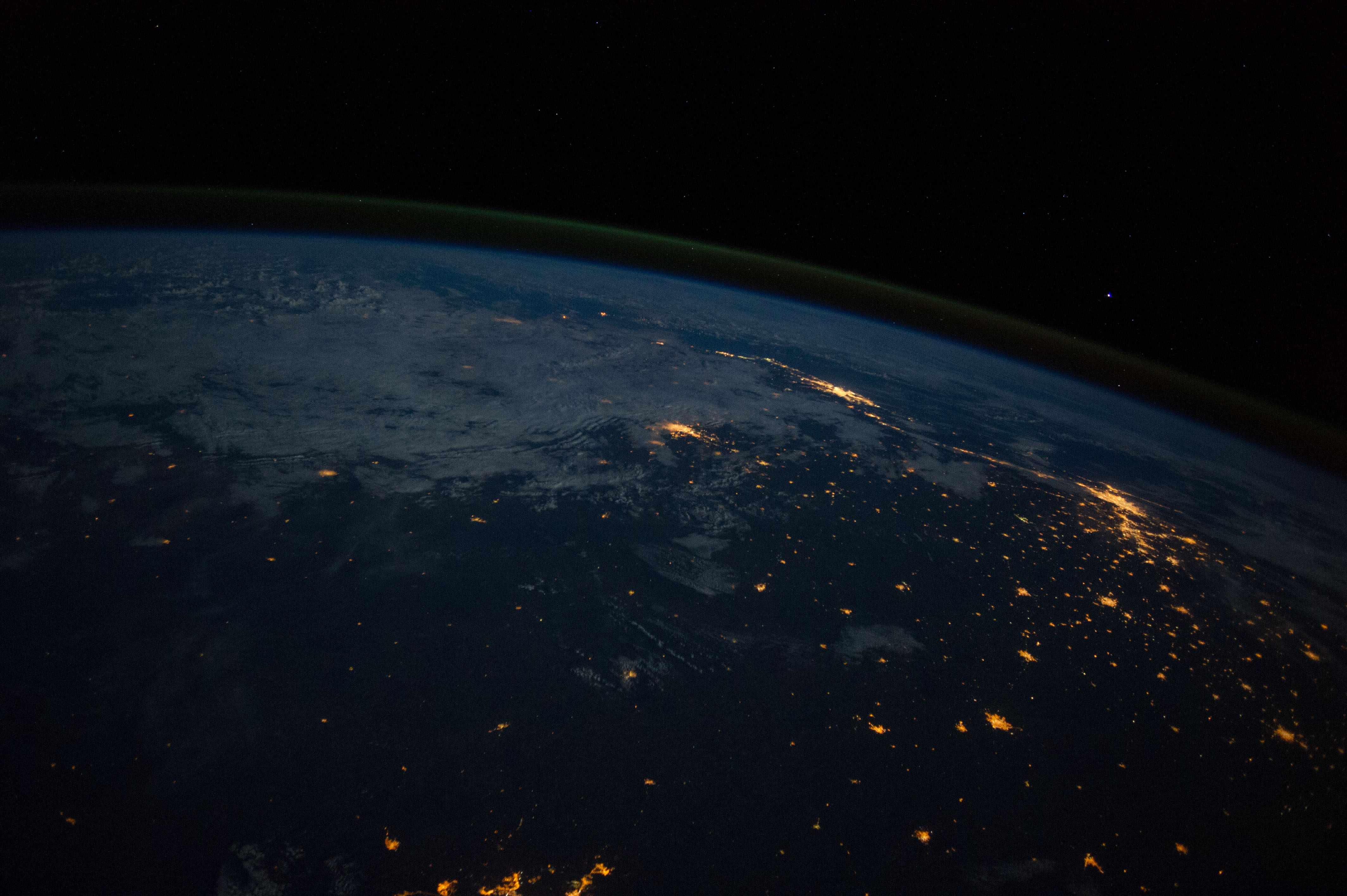
In other words, the earth is lopsided.
Days are longer during summer months as Earth’s North Pole tilts toward the sun and sunlight is directed downward, Lebo said, “more nearly straight down.”
Strangely, sunlight hitting Earth July 6 is less intense than during the perihelion in January, when Earth is closest to the sun – about 7 percent less. This is because most of the sunlight in July is hitting land on the Northern Hemisphere, due to the Earth’s tilt, which is an elliptical orbit, has a lower heat capacity because dirt and rocks aren’t in motion; they are stationary and those materials heat up more quickly.
Water, on the other hand, has a high heat capacity that comes from the ability to store heat, which in turn moderates the underwater environment.
It may seem contradictory with July being the hottest month on a planet that is farther away from the sun than at any other point in the year. Likewise, in January the situation is reversed when Earth is closest to the sun but will be cooler, thanks to its water-dominated hemisphere facing the sun.
Email: cblowers@stgnews.com
Twitter: @STGnews
Copyright St. George News, SaintGeorgeUtah.com LLC, 2018, all rights reserved.