Bullying in schools, part 1: District policies eyed after third-grader stabbed with pencil
ST. GEORGE — When a child comes home from school in tears or is unusually quiet, parents often are left to wonder what is really going on. For Washington County resident Amanda Hawley, there was no question her daughter recently had been targeted and victimized by a classmate.
Hawley told St. George News that her daughter, a third-grade student at Diamond Valley Elementary, came home from school with an injury last month after a boy in her class reportedly stabbed her in the arm with a pencil. Even more alarming, Hawley said the boy had given her daughter a note indicating his intentions by writing “I’m going to stab you!”
While specific details of this particular incident and its aftermath have not been divulged by school officials due to federal privacy laws, the situation illustrates a fairly common problem. Despite ongoing efforts to combat bullying and harassment at schools, authorities say it’s still prevalent.
According to the Utah Anti-Bullying Coalition, approximately 1 in 5 kids is affected by bullying, and more than half of students witness some form of bullying every day.
In addition, according to research cited by the coalition, 1 in 10 teenagers bullied at school have attempted suicide, and another 30 percent have thought about doing some form of self-harm. And with youth spending more time than ever on their phones, video games, computers and other electronic devices, the risk of being subjected to cyberbullying is much higher.
Read more: Possible link found between some Utah teen suicides, electronic devices
Both Washington and Iron county school districts have policies in place that define bullying and related behaviors, as well as providing procedures for reporting.
Iron County School District’s directive covers “Bullying, Cyber-bullying, Harassment, Hazing, and Retaliation,” while Washington County School District has similar definitions and procedures outlined in its “Safe Schools Policy.”
So what should parents do if they suspect their child is being bullied or is being a bully to someone else? Authorities suggest the following steps:
Identifying behaviors
Before prevention or intervention can take place, the problem behavior needs to be identified. Parents should pay close attention to what their children say and how they act, watching for any signs of negative behaviors or activities, along with any sudden or unusual changes in demeanor.
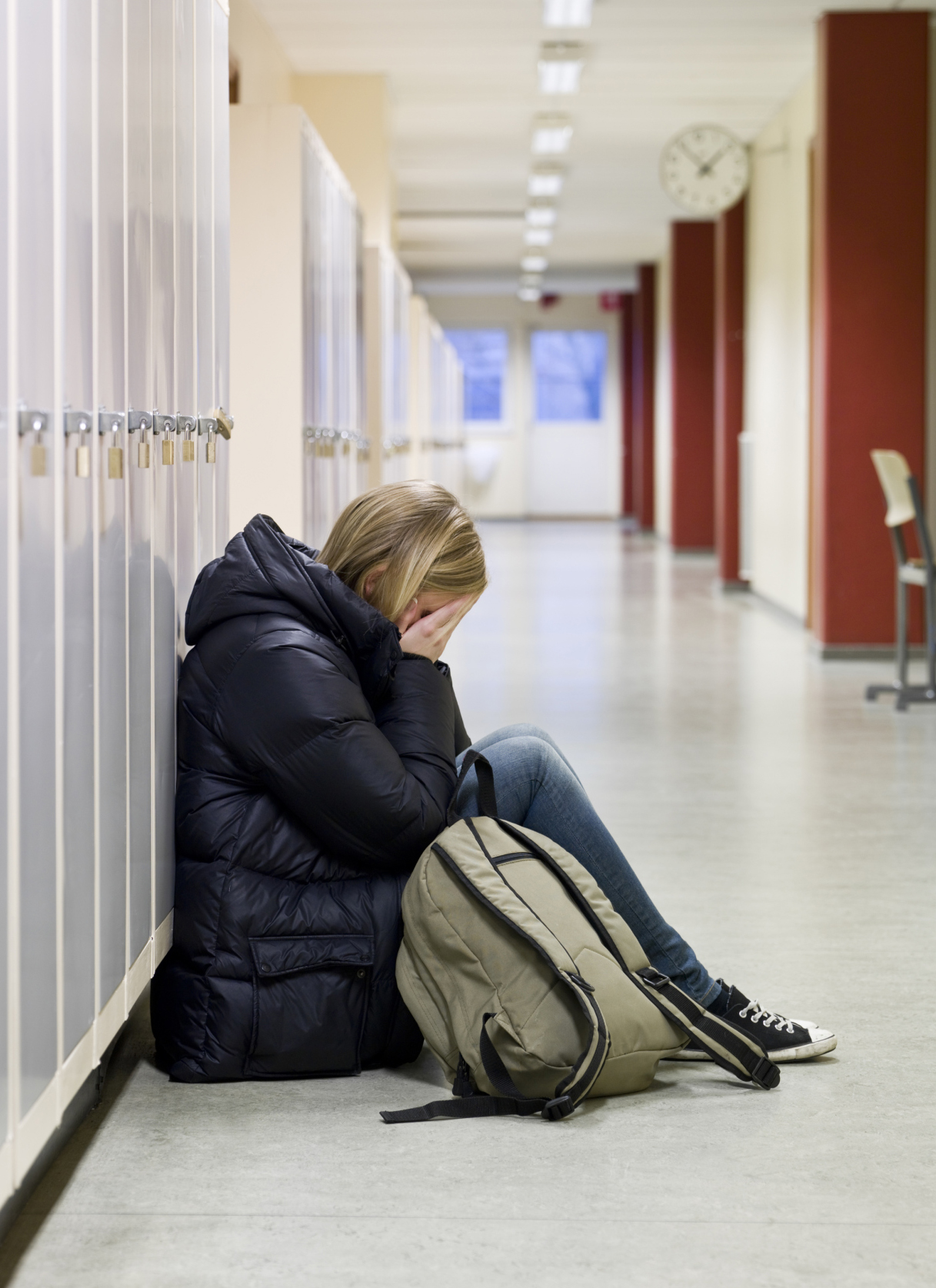
Bullying can be physical, verbal or social. It happens at any time or place, including in the virtual world of cyberspace. In the case of school bullying, it might be happening in any number of places outside the classroom, including the bus, restrooms, locker rooms, hallways, playgrounds and anyplace where close adult supervision might not be present.
Common examples of bullying include direct behaviors such as teasing, taunting, hitting, threatening, destroying property and forcing someone to do something against their will. Indirect bullying behaviors include slandering, spreading rumors, excluding and manipulating.
Experts say an imbalance of power is the underlying impetus for most bullying behavior. Such an imbalance between the bully and their target may either be real or perceived.
The target is often singled out because they are perceived to be different in some way, such as weight, race, gender, disability or perceived sexual orientation.
Reporting
If bullying is suspected, the first step is to report it. Without retaliating or further engaging the bully, the bullied person should save any evidence – such as text messages, notes or photos that will help document the issue – and then tell a trusted adult in a position of authority.
Both Iron and Washington county school districts recommend starting with notifying the classroom teacher and moving on to school counselors or administrators as necessary. This doesn’t just apply to a student being bullied. Iron County School District Superintendent Shannon Dulaney said it also applies if a parent believes their student is the one doing the bullying. In an email to St. George News, Dulaney said:
They should immediately report their suspicions to the child’s teacher if it is a classroom issue or to school administration if it is an issue that is taking place outside the classroom. If a school administrator is not in the building, then a report can be made to a school counselor. Every adult employee at every school can take a report of bullying from students.
Dulaney said the process is shared with all students in opening assemblies each year, as well as being covered in student handbooks and at Back to School night events.
Steven Dunham, director of communications for Washington County School District, also said the classroom teacher is the “first line of defense.”
“They (parents) should first contact the teacher and have them watch to see if they see any signs of bullying,” Dunham said in an email. “Every one of our teachers and administrators have been trained about bullying through the Safe Schools training program. Then, they should contact the principal to address their concerns and make sure the problem is being resolved.”
Additionally, Dunham said, each of the district’s schools, along with the district itself, has a tip line/button on its website. Clicking the button pulls up an online form that can be filled out anonymously.
“This allows students to report an incident without fear of retaliation,” Dunham said.
Intervention and discipline
Once notification has taken place, parents should follow up to make sure the problem has been appropriately addressed and dealt with.
“Our school administrators are instructed to take every report seriously and make an inquiry in regards to the accusations/report,” Dulaney said, adding that all school staff receive training on bullying policies and procedures at least annually. “If necessary, our school resource officers are involved in the inquiry.”
Dulaney said once a report is made, an inquiry takes place “and appropriate discipline and interventions are put in place to mitigate and stop the inappropriate behaviors.”
Iron County Schools are focusing on being proactive in combating bullying, she said, by enlisting the help of peer support groups that work closely with school counseling staff to provide support to other students who may be experiencing bullying or harassment.
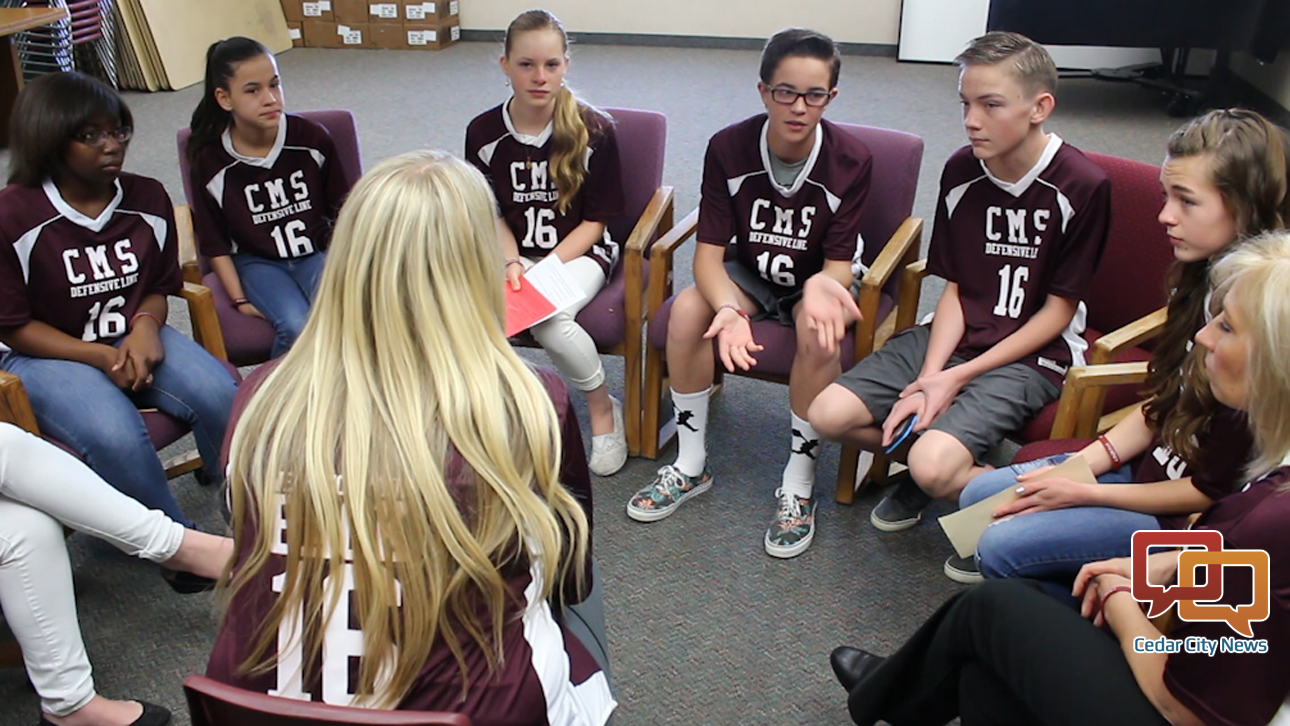
“All of our secondary schools and most of our elementary schools have schoolwide interventions for positive behavior as well as student-initiated and supported groups like our Ambassadors and Hope Squads,” Dulaney said. “These students are given instruction and support in how to listen and ask questions that can move toward conflict resolution as well as detect students who may be in trauma or have experienced a measure of bullying or harassment.”
Besides the programs cited, Iron County School District officials recently reported that students at Iron Springs Elementary, Cedar Middle and Parowan High have been systematically improving their behavior and reaching higher expectations of conduct via a positive-reinforcement program called “Cool 2 Care,” which has the stated goal of establishing “a climate in which appropriate behavior is the norm.”
Schools in Washington County also have reportedly seen success with similar programs. Last month, students at Riverside Elementary School in Washington City wrapped up a “Week of Wonder” that included students participating in service projects and engaging in other acts of kindness.
Read more: Elementary school’s ‘Week of Wonder’ spreads message of kindness
Despite these programs and policies, Hawley indicated she was not entirely satisfied with how her daughter’s incident was handled.
In her original message to St. George News, Hawley wrote that her daughter’s injury occurred inside the classroom and that her daughter had given the threatening note to the teacher, but no action was taken at that point. Approximately 10 minutes later, Hawley wrote, the boy followed through and stabbed her daughter’s arm with enough force to go through the fabric of her jacket and break the girl’s skin.
Hawley later told St. George News in an interview that she promptly reported the incident to school officials, saying it was the second time the same boy had done that to her daughter.
The boy allegedly responsible for the incident reportedly received a three-day suspension from school, but Hawley said she felt she was not given enough opportunity to share her concerns with the principal and teacher, both of whom Hawley said suggested that her daughter was at least partially to blame.
Hawley said she told the principal she thought highly of her daughter’s teacher, “but she needs to also focus on the safety of our children. We should be feeling safe to let our young children go to school, not scared.”
Hawley said she believes school administrators could have done a better job of communicating the situation, including behavioral expectations and corrective measures, to everyone involved.
“Its happening in our schools and we need to remind our children to be kind to one another,” Hawley said. “If they are being bullied, tell their teacher and parents. Don’t just let it happen.”
Diamond Valley Elementary School officials declined to comment on the story, instead referring St. George News to Dunham, who said he couldn’t speak to any one case in particular, citing privacy laws.
“Specific information that might identify a child is all protected under federal law,” he said.
However, speaking generally about the district’s Safe Schools policy, Dunham said that with any instance that occurs in the schools, there’s an investigation that takes place. In addition to suspension from school, other potential disciplinary outcomes may include loss of athletic eligibility or other extracurricular privileges, expulsion and even criminal charges.
“If the situation arises that it’s criminal, we involve law enforcement,” he said, “whether it be the Sheriff’s Office or the police. They’ll conduct a secondary investigation and they’ll take a look at what we’ve done. Sometimes they’ll say you handled everything perfectly. Sometimes they’ll say, hey, you should also do this and they might give us suggestions.”
St. George Police Department public information officer Lona Trombley confirmed this.
“Generally, officers don’t address bullying at the schools unless it rises to a criminal level, such as electronic harassment, assault, etc.,” Trombley said, adding that she encourages parents to monitor their children’s media and electronic devices.
“Address any issues that you see,” she said, “whether it be making sure your child is being appropriate or alerting parents of another child if something is wrong. If that doesn’t correct the situation, then, depending on what is occurring, let the school and/or the police know.”
Hawley said she hopes parents and teachers will put the children first and listen to them when they say they are being bullied.
“Don’t just push it aside or think it won’t go any further,” Hawley said.
Dunham said in the event a parent feels like a situation has not been appropriately addressed, they are welcome to contact the district for additional follow-up.
“Our ultimate goal is to provide a safe school for every child in the school building,” he said. “You can’t always stop an incident from taking place, but you sure can correct it when it happens. And that’s our goal is to prevent it whenever we can. And when we can’t, (we try) to correct the action so that our students feel safe, because when they come to our schools, we don’t want anything to impede the learning process. We want them to feel safe so they can sit down and focus on what they need to learn in that classroom.”
Tomorrow’s report, the second of two installments, will address the topic of teenage suicide and ongoing prevention efforts.
Resources
- Utah Anti-Bullying Coalition website.
- Stopbullying.gov website.
- National Education Association’s anti-bullying resources.
Email: jrichards@stgnews.com
Twitter: @STGnews
Copyright St. George News, SaintGeorgeUtah.com LLC, 2017, all rights reserved.