Utah nurse’s arrest raises questions on evidence collection
UTAH (AP) – The videotaped arrest of a Utah nurse who refused to allow blood to be drawn from an unconscious patient has raised questions about how far officers can go to collect evidence and has led to policy changes within the Salt Lake City Police Department.

AP Photo by Rick Bowmer, St. George News
Alex Wubbels, a nurse at University Hospital in Salt Lake City, and a former alpine skier who competed in the 1998 and 2002 Winter Olympics, said she adhered to her training and hospital protocols to protect the rights of a patient who could not speak for himself.
“You can’t just take blood if you don’t have a legitimate concern for something to be tested,” Wubbels said. “It is the most personal property I think that we can have besides our skin and bones and organs.”
Police body-camera video taken July 26 shows Wubbels, who works in the burn unit, calmly explaining that she could not take blood from a patient who had been injured in a deadly car accident, citing a recent change in law. A 2016 U.S. Supreme Court ruling said a blood sample cannot be taken without patient consent or a warrant.
Wubbels told Payne that a patient had to allow a blood sample to determine intoxication or be under arrest. Otherwise, she said police needed a warrant. Payne did not have one, but he insisted on the blood draw.
The dispute ended with Payne arresting Wubbels.
Here are some of the legal issues involved:

Photo courtesy of Salt Lake City Police Department/Karra Porter via AP, St. George News
What happened?
Police body-camera video released Thursday shows Salt Lake City Detective Jeff Payne handcuffing nurse Alex Wubbels after she refused to allow blood to be drawn from an unconscious patient after a car crash.
In the video, Wubbels explains she’s protecting the patient’s rights and she can’t take the man’s blood unless he is under arrest, police have a warrant or the patient consents.
None of that applied, and the patient was not a suspect. Payne’s written report says he wanted the sample to show the victim did nothing wrong.
The dispute ended with Payne telling Wubbels: “We’re done, you’re under arrest.” He pulled Wubbels outside while she screams: “I’ve done nothing wrong!”
Wubbels is being praised for her actions to protect the patient, while Payne and another officer are on paid leave. Criminal and internal affairs investigations are underway.
Legal issues at play?
A 2016 U.S. Supreme Court ruling says a blood sample can’t be taken without patient consent or a warrant. But in this case, the officer reportedly believed he had “implied consent” to take the patient’s blood.
Implied consent assumes that a person with a driver’s license has given approval for blood draws, alcohol breath screenings or other tests if there’s reason to believe the driver is under the influence.
Paul Cassell, a criminal law professor at the University of Utah’s S.J. Quinney College of Law, wrote in an opinion piece for The Salt Lake Tribune that state law doesn’t permit a blood draw in this situation — especially since the blood was being sought to prove the patient was not under the influence.
Wubbels’ attorney, Karra Porter, said the state’s implied-consent law “has no relevance in this case whatsoever under anyone’s interpretation. … The officer here admitted on the video and to another officer on the scene that he knew there was no probable cause for a warrant.”
Medical personnel vs. police
Charles Idelson, a spokesman for National Nurses United, said a nurse’s prime responsibility is to be a patient advocate and protect patients, especially when they can’t consent themselves.
Meanwhile, police are investigators and have to capture forensic evidence, which in the case of a blood draw, is decaying with every passing minute, said Ron Martinelli, a forensic criminologist and certified medical investigator.
“For the officer, the clock is ticking,” Martinelli said.
But even with those different objectives, police and medical professionals routinely cooperate and conflicts like the Utah case are infrequent, Martinelli said.
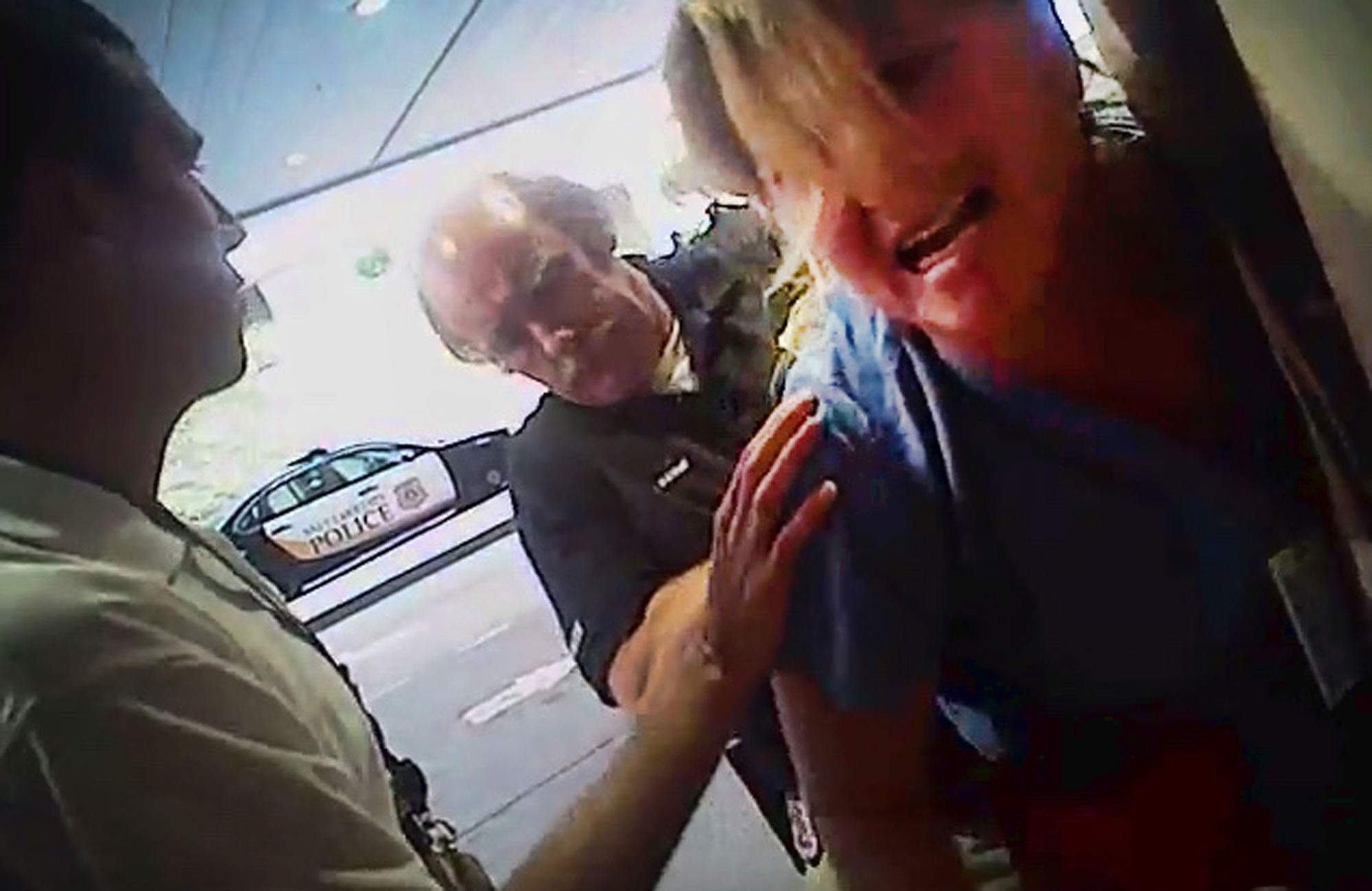
Photo courtesy of Salt Lake City Police Department/Karra Porter via AP, St. George News
The officers
A second officer who was put on leave Friday has not been formally identified, but officials have said they were reviewing the conduct of Payne’s boss, a lieutenant who reportedly called for Wubbels’ arrest if she kept interfering.
Wubbels, who was not charged with a crime, has said that Payne “bullied me to the utmost extreme.” Payne hasn’t returned messages left at publicly listed phone numbers.
The Salt Lake City police chief and mayor also apologized and changed department policies on blood draws. Police spokeswoman Christina Judd said the new policy does not allow for implied consent for any party and requires a warrant or consent.
Judd also said the agency has met with hospital administration to ensure it does not happen again and to repair relationships.
Written by AMY FORLITI, reporting from Minneapolis. Associated Press writer Sally Ho in Las Vegas, and Michelle Price and Brady McCombs contributed to this story.
Click on photo to enlarge it, then use your left-right arrow keys to cycle through the gallery.

In this July 26, 2017, frame grab from video taken from a police body camera and provided by attorney Karra Porter, nurse Alex Wubbels is arrested by a Salt Lake City police officer at University Hospital in Salt Lake City. The Utah police department is making changes after the officer dragged Wubbels out of the hospital in handcuffs when she refused to allow blood to be drawn from an unconscious patient |
Photo courtesy of Salt Lake City Police Department/Karra Porter via AP, St. George News

Nurse Alex Wubbels speaks during an interview, Friday, Sept. 1, 2017, in Salt Lake City. Wubbels followed hospital policy and advice from her bosses when she told Salt Lake City police Detective Jeff Payne that he could not get a blood sample without a warrant or consent from the patient, according to her attorney. The police department is making changes after Payne dragged a screaming Wubbels out of the hospital in handcuffs when she refused to allow blood to be drawn from the unconscious patient |
AP Photo by Rick Bowmer, St. George News

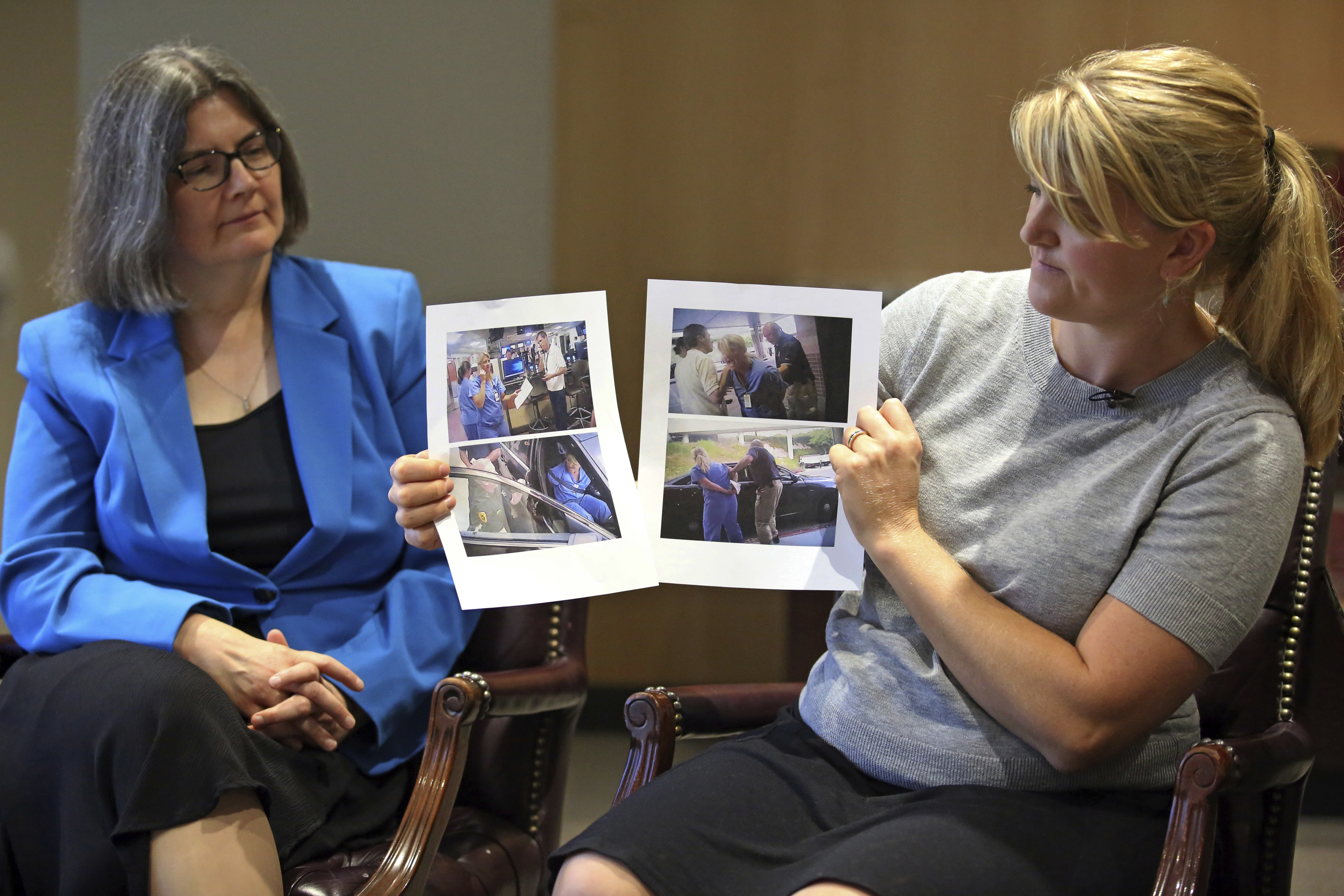
Nurse Alex Wubbels, right, displays video frame grabs of herself being taken into custody, during an interview, Friday, Sept. 1, 2017, in Salt Lake City. Wubbels followed hospital policy and advice from her bosses when she told Salt Lake City police Detective Jeff Payne that he could not get a blood sample without a warrant or consent from the patient, according to her attorney. The police department is making changes after Payne dragged Wubbels out of the hospital in handcuffs when she refused to allow blood to be drawn from the unconscious patient | AP Photo by Rick Bowmer, St. George News

In this July 26, 2017, frame grab from video taken from a police body camera and provided by attorney Karra Porter, nurse Alex Wubbels is arrested by a Salt Lake City police officer at University Hospital in Salt Lake City. The Utah police department is making changes after the officer dragged Wubbels out of the hospital in handcuffs when she refused to allow blood to be drawn from an unconscious patient |
Photo courtesy of Salt Lake City Police Department/Karra Porter via AP, St. George News

Nurse Alex Wubbels, right, looks on during an interview while her attorney Karra Porter looks on, Friday, Sept. 1, 2017, in Salt Lake City. Wubbels followed hospital policy and advice from her bosses when she told Salt Lake City police Detective Jeff Payne that he could not get a blood sample without a warrant or consent from the patient, according to Porter. The police department is making changes after Payne dragged a screaming Wubbels out of the hospital in handcuffs when she refused to allow blood to be drawn from the unconscious patient | AP Photo by Rick Bowmer, St. George News

In this July 26, 2017, frame grab from video taken from a police body camera and provided by attorney Karra Porter, nurse Alex Wubbels is arrested by a Salt Lake City police officer at University Hospital in Salt Lake City. The Utah police department is making changes after the officer dragged Wubbels out of the hospital in handcuffs when she refused to allow blood to be drawn from an unconscious patient |
Photo courtesy of Salt Lake City Police Department/Karra Porter via AP, St. George News

Nurse Alex Wubbels, right, displays video frame grabs of herself being taken into custody while her attorney Karra Porter looks on during an interview, Friday, Sept. 1, 2017, in Salt Lake City. Wubbels followed hospital policy and advice from her bosses when she told Salt Lake City police Detective Jeff Payne that he could not get a blood sample without a warrant or consent from the patient, according to Porter. The police department is making changes after Payne dragged Wubbels out of the hospital in handcuffs when she refused to allow blood to be drawn from the unconscious patient | AP Photo by Rick Bowmer, St. George News

Nurse Alex Wubbels speaks during an interview Friday, Sept. 1, 2017, in Salt Lake City. Wubbels followed hospital policy and advice from her bosses when she told Salt Lake City police Detective Jeff Payne that he could not get the blood sample without a warrant or consent from the patient, said her lawyer, Porter | AP Photo by Rick Bowmer, St. George News
Email: news@stgnews.com
Twitter: @STGnews
Copyright 2017 The Associated Press. All rights reserved. This material may not be published, broadcast, rewritten or redistributed.