Hatch: ‘It’s high time to address research into medical marijuana’
ST. GEORGE – In a speech filled in puns Wednesday afternoon, Sen. Orrin Hatch, R-Utah, told the U.S. Senate it was high time for the country to cut the bureaucratic red tape and regulation holding back medical marijuana research.
“It’s high time to address research into medical marijuana,” Hatch said. “Our country has experimented with a variety of state solutions without properly delving into the weeds on the effectiveness, safety, dosing, administration and quality of medical marijuana.
Hatch’s “Marijuana Effective Drug Study Act of 2017,” or MEDS Act, is meant to streamline the research process surrounding medicinal cannabis and get it into the hands of patients more quickly.
“…The federal government strains to enforce regulations that sometimes do more harm than good,” Hatch said. “To be blunt, we need to remove the administrative barriers preventing legitimate research into medical marijuana, which is why I’ve decided to roll out the MEDS Act.”
Though many states have legalized marijuana for medical and recreational use, it is illegal at the federal level and remains classified as a Schedule I controlled substance by the Drug Enforcement Agency. This and other federal regulations have made it difficult for research to move forward.
Just getting federal approval to conduct research on cannabis can take over a year as applicants have to go through various federal agencies, Hatch said. Without proper research done into the potential medical applications of marijuana, all most people have to go on is “anecdotal information” and that poses its own risks for patients, he said.
“The longer researchers have to wait, the longer patients have to suffer,” Hatch said.
Should the MEDS Act pass, the following research conducted in its wake “has the potential to benefit millions of Americans suffering from a wide-range of conditions, including cancer, severe epilepsy, post-traumatic stress disorder, residual effects after a stroke, or chronic pain.” the senator said.
While being in favor of medical research and application as determined by medical experts, Hatch said he remains strongly opposed to the use of recreational marijuana.
“I am still very much opposed to the legalization of recreational marijuana,” he said. “But I strongly support research into the medicinal benefits of marijuana, and I remain committed to helping patients find the help they need, whether they suffer from cancer, severe seizures or any other chronic disorder.”
Hatch also referenced the opioid epidemic in Utah and across the nation. Many people are looking for non-narcotic alternatives to painkillers. One of those alternatives in medical marijuana.
“And after careful, deliberative thought, I’ve concluded that it’s an alternative worth pursuing,” Hatch said.
Others who support Hatch’s bill include Sens. Brian Schatz, D-Hawaii, Chris Coons, D-Delaware, Cory Gardner, R-Colorado, and Thom Tillis, R-North Carolina.
“I urge my colleagues to join Senator Schatz and me in our joint effort to help thousands of Americans suffering from a wide range of diseases and disorders,” Hatch said. “In a Washington at war with itself, I have high hopes that this bipartisan initiative can be a kumbaya moment for both parties.”
The Utah Legislature passed a medical research bill earlier this year that authorizes state colleges and other institutions to study marijuana’s claimed medicinal application.
Those institutions will nonetheless still have to clear that research with federal agencies and their associated red tape mentioned by Hatch.
While Hatch hopes to open the way for more medical cannabis research, others argue studies have already been done and it’s time to stop making patients wait.
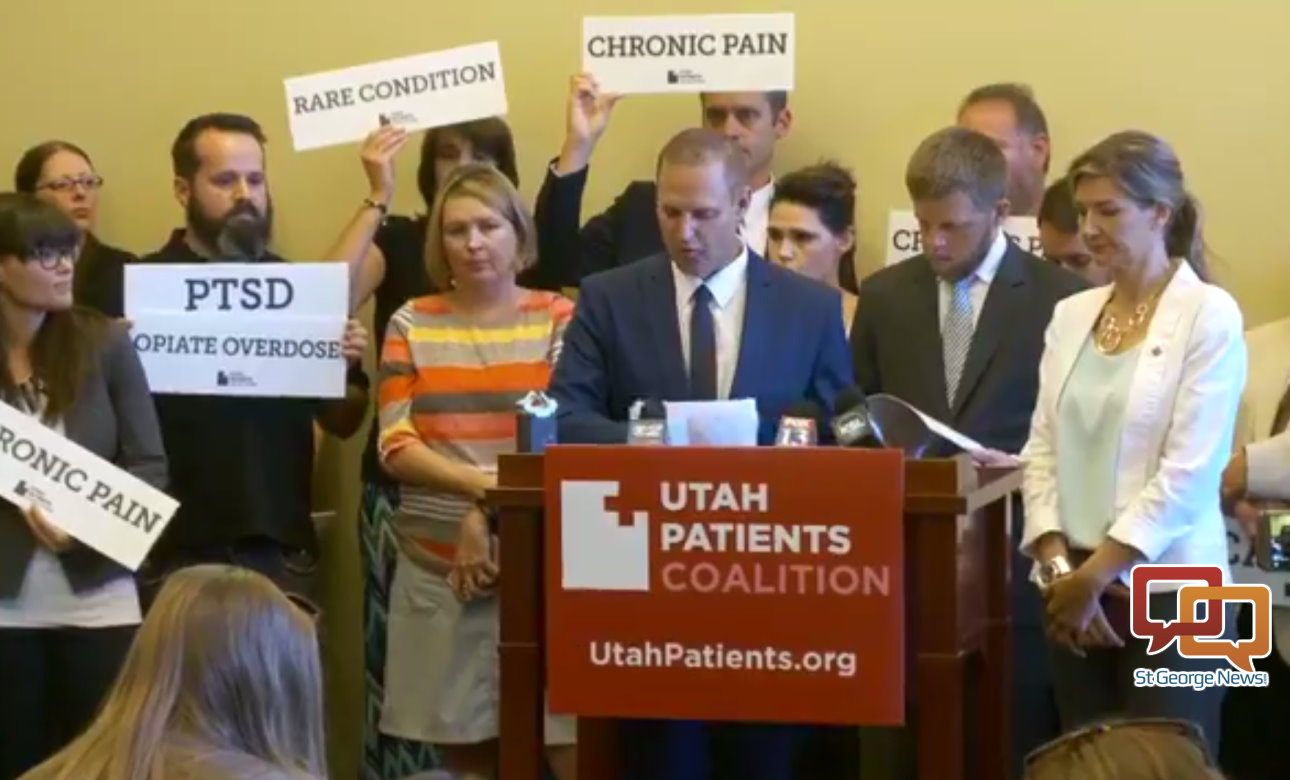
It is an argument made by members of the Utah-based Together for Responsible Use and Cannabis Education, or TRUCE, and the Utah Patients Coalition. Both of groups advocate for the legalization of medical cannabis in Utah beyond its current, albeit limited use of CBD-based cannabis oils to treat epilepsy.
To this end, the Utah Patients Coalition launched a ballot initiative in June and has recently begun to gather signatures. If successful, the ballot initiative will put the question of medical cannabis to the people of Utah in 2018 and remove it from a legislature that advocates argue has dragged its feet for too long.
St. George resident David Cromar, whose 10-year-old son Holden uses cannabis oil to help control a rare form of epilepsy, supports the ballot initiative and is helping to gather signatures for it.
“We already know it works,” Cromar said in a previous interview with St. George News. “We just need access.”
According to a poll published by The Salt Lake Tribune in late July, an estimated 78 percent of registered Utah voters support the ballot initiative.
A breakdown of what the MEDS Act will do if passed, according to Hatch’s Office:
- Encourage more research on the potential medical uses of marijuana by streamlining the research registration process without imposing a scheduling determination on the Drug Enforcement Agency.
- Make marijuana more available for legitimate scientific and medical research and the commercial production of any FDA-approved drugs derived from marijuana.
- Retain important checks to protect against diversion or abuse of the controlled marijuana substances.
- Require the National Institute on Drug Abuse to develop and publish recommendations for good manufacturing practices for growing and producing marijuana for research.
- Require the Attorney General to increase the national marijuana quota in a timely manner to meet the changing medical, scientific and industrial needs for marijuana.
- Codify the administration’s decision to terminate the Public Health Service and its review of proposals for medical research on marijuana. Prevent the Department of Health and Human Services from instituting any other marijuana-specific protocol reviews, other than the voluntary review that a researcher can request from National Institutes of Health in order to access the expedited DEA registration process.
Email: mkessler@stgnews.com
Twitter: @MoriKessler
Copyright St. George News, SaintGeorgeUtah.com LLC, 2017, all rights reserved.