University says costumes depicting ‘Indian chiefs’ and ‘banditos’ unacceptable; critics question campaign
ST. GEORGE — Southern Utah University’s Center for Diversity and Inclusion is asking people to think twice before dressing up in “bandito,” “Indian chief” and other culture- or ethnic-specific costumes for Halloween. And they aren’t the only college doing so. However, some critics are saying it’s going too far.
SUU joined other colleges around the country in October to launch the “My Culture is not a Costume” campaign in an effort to combat what campaign organizers refers to as culturally insensitive costumes that reinforce stereotypes of entire ethnic groups.
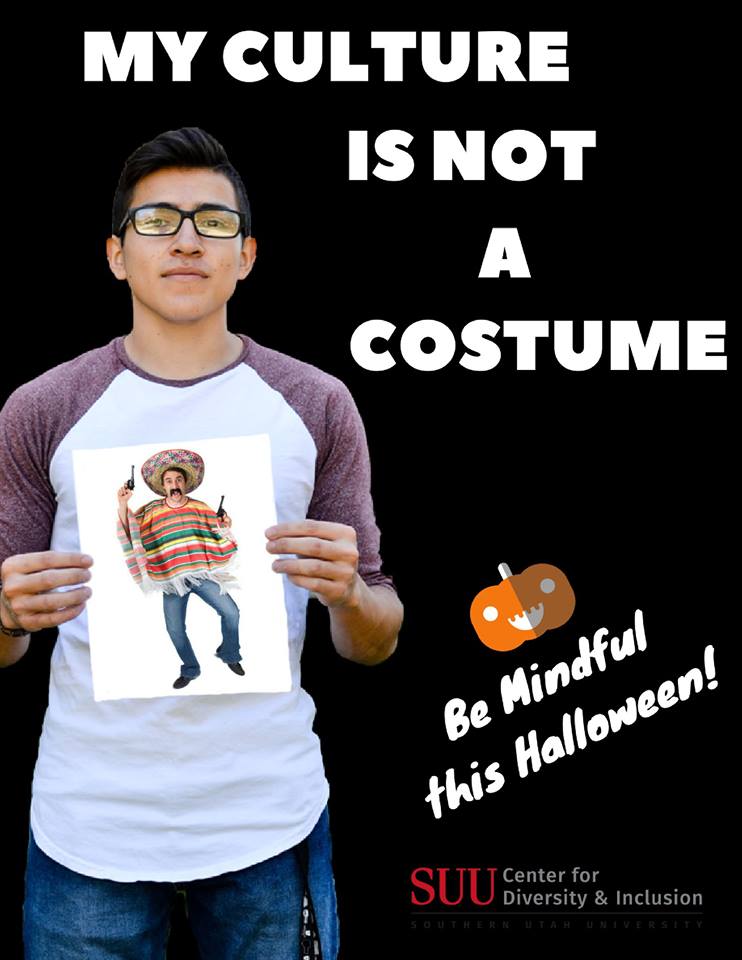
Billboards around the SUU campus and images shared on social media depict four students from African American, Hispanic/Latino, Native American and Polynesian ethnic backgrounds displaying images of offensive costumes, such as a woman in blackface and a pair donning traditional Native American headdresses.
“You generalize my whole culture and heritage when you dress-up like an ‘amigo’ and shout in broken Spanish,” Erick Peña, one of the students depicted in the campaign, said in a news release issued by the university. “People should become aware of the pain this causes.”
The Center for Diversity and Inclusion said it hopes the campaign prompts people to do more research, ask questions and learn correct and appropriate cultural terminology in order to bridge the gap from narrow-minded stereotypes to appropriate cultural respect and awareness.
“It’s our job in the CDI to represent the underrepresented groups on campus,” Center for Diversity and Inclusion Coordinator Christopher Mendoza said in the news release. “This is an ongoing process, but I think it starts with having a dialogue on how we can appreciate someone’s culture without disrespecting it.”
Several other colleges nationwide are promoting similar ad campaigns cautioning against potentially offensive costumes or themes, such as painting or tinting of skin, stereotypes of Asian or Pacific Islander cultures and Native and Latin American indigenous dress.
Critics of the campaign have said it is another example of political correctness that could lead to a host of costumes being prohibited and turn students off from celebrating Halloween.
“The cultural temperature on this has gotten so high that nothing is appropriate anymore. We are getting to the point where prohibition is the rule,” New York University Professor of Global Liberal Studies Michael Rectenwald said in a report by the Associated Press.
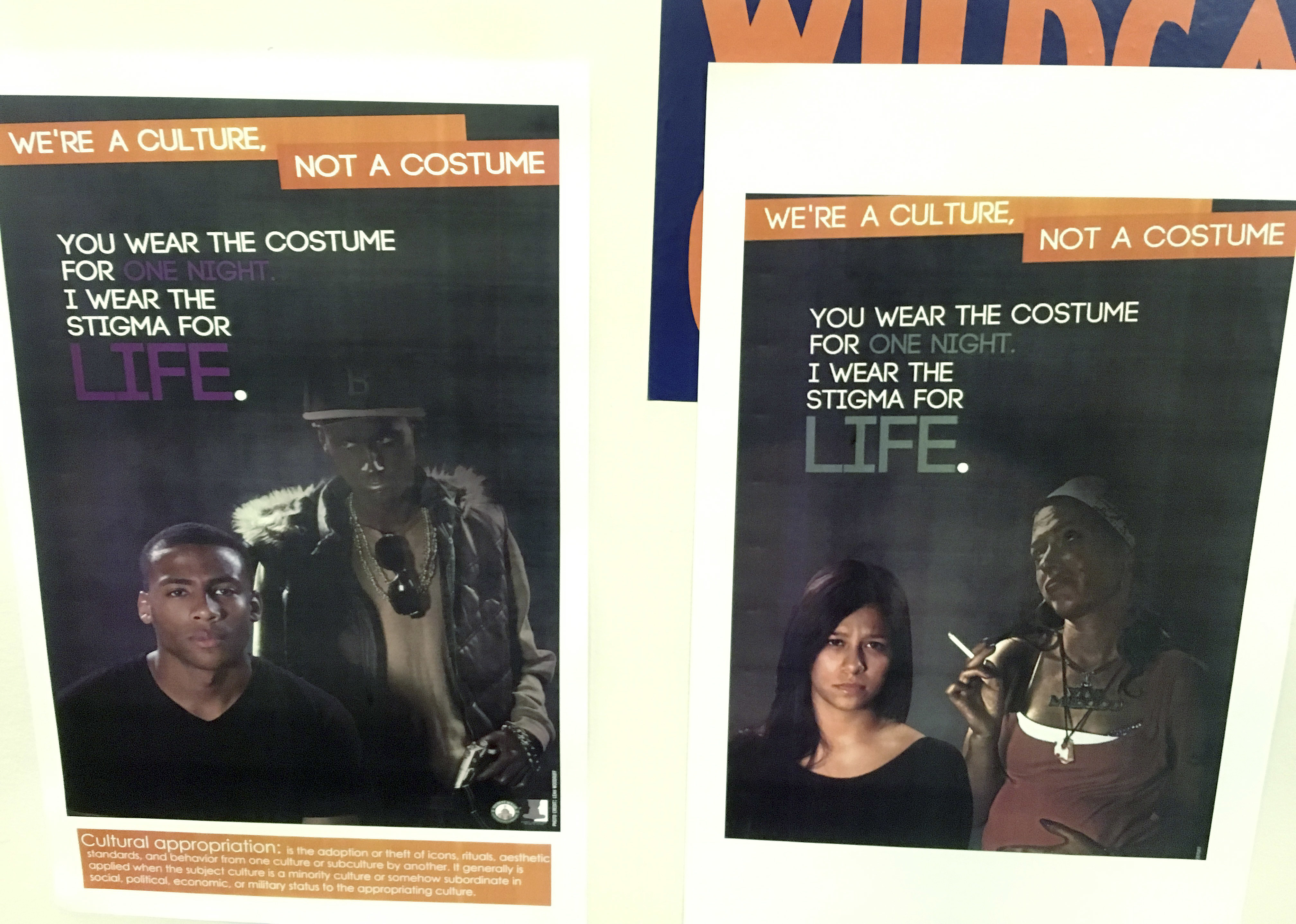
The campaign does not mandate what costumes students can wear, instead suggesting students consider a costume’s implications of historical cultural appropriation of minority groups.
The Associated Press reported that many students at the University of New Hampshire, which is also running the campaign, said they understood the concerns, and a few said it made them reconsider costume choices. Others said it was unnecessary for the school to suggest what they wear and complained that their decision to wear an ethnic costume was aimed at celebrating a culture, not mocking it.
“Representing an entire race as a Halloween costume is wrong and offensive,” SUU student Sunny Sims said in the university news release. She appears in one of the campaign ads holding a photo of someone dressed in blackface.
“You are turning what I look like into a joke and mocking historical oppression,” Sims said. “This is an important conversation to have not only during Halloween but all year.”
MICHAEL CASEY of the Associated Press contributed to this report.
Email: jwitham@stgnews.com
Twitter: @STGnews
Copyright St. George News, SaintGeorgeUtah.com LLC, 2017, all rights reserved.