Cannabis could be grown in Utah for research, terminally ill patient use under proposed bills
ST. GEORGE – Two bills that would allow terminally ill patients access to medicinal marijuana and farmers to grow marijuana for research purposes under state supervision were given a favorable nod by lawmakers Wednesday as they were pushed out of a legislative committee and sent to the Utah House floor.
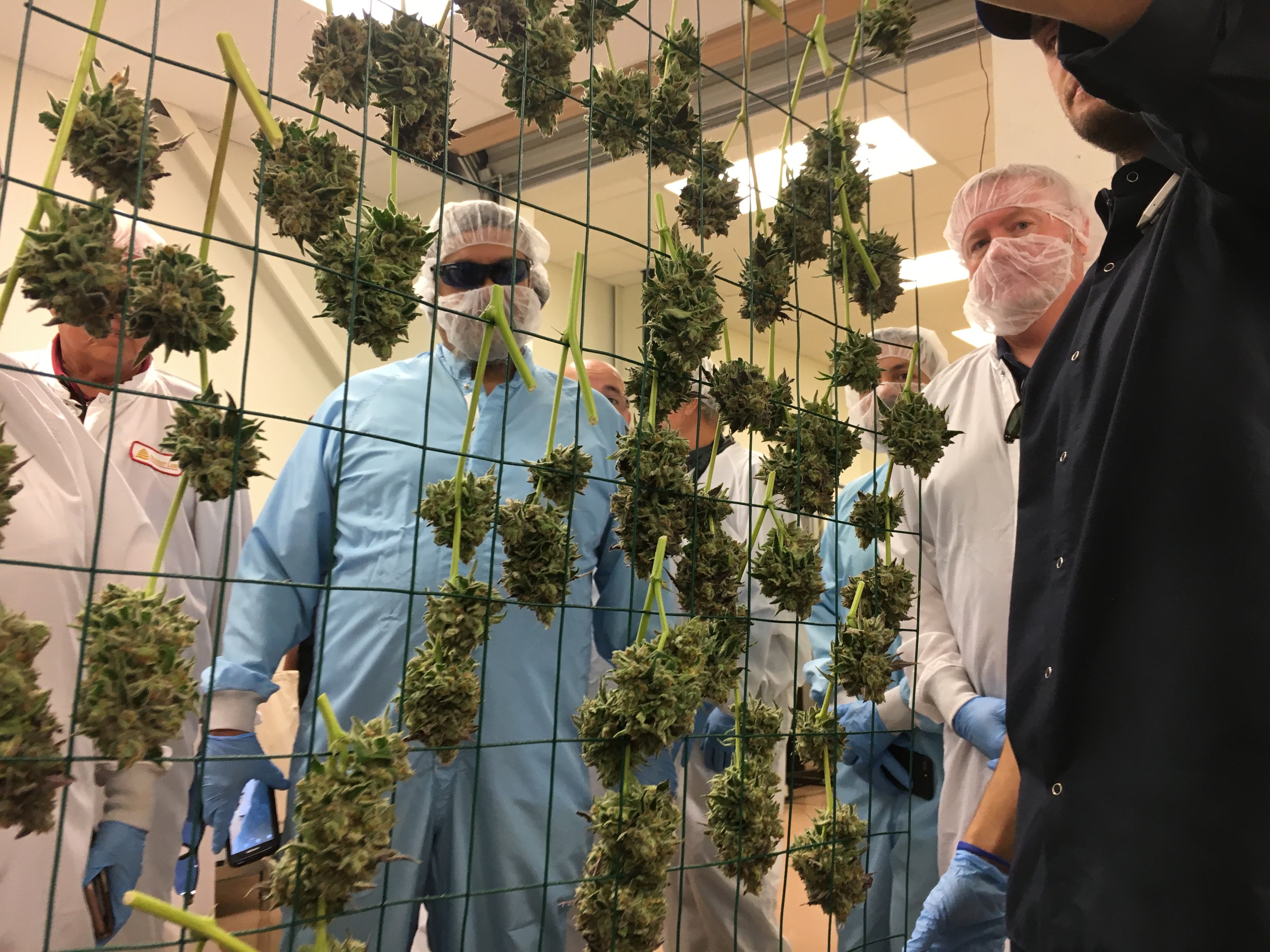
Orem Republican Rep. Brad Daw presented substitute versions of House Bills 195 and 197 to the House Health and Human Services Committee Wednesday. The bills drew some concern from lawmakers and others, yet not enough to stop their advancement.
Allowing third parties to grow marijuana for research
Daw described the legislation as being companion bills, as the marijuana that would be provided to terminally ill patients would be grown in Utah.
Quickly moving through House Bill 197, “Cannabis Cultivation Amendments,” Daw told the committee the bill would allow for the growth of “full-strength cannabis” within the state, as being such across state lines isn’t exactly something the Drug Enforcement Administration “is a big fan of.”
There is research being done on CBD, the non-psychoactive portion of the marijuana plant, within the state, Daw said. However, if they really want to research and test the full extent of the plant’s potential medicinal use, then the entire plant, including the portion that contains THC, or the chemical part that is psychoactive and makes a user “high,” should also be explored.
“We need to allow there to be a supply,” Daw said.
House Bill 197 allows differing strains of cannabis to be grown by third parties under the supervision of the Utah Department of Agriculture and Food. Access to the marijuana would be provided through a state-run dispensary.
This is where House Bill 197 connects with 195, as it is the point where terminally ill patients would be able to access experimental marijuana-based medications that are recommended by either a physician or nurse practitioner.
House Bill 197 passed with a 7-3 vote, with three committee members absent.
State law versus federal drug policy
There were concerns expressed over the legality of both bills, however, as federal law still lists marijuana as an illegal schedule I narcotic.
“The simple fact is the DEA will tell you what we’re trying to do is against the law,” Daw said, yet added Congress hasn’t provided funding for the prosecution of marijuana production and sale in states where it has been legalized. “At best, it’s a question mark,” he said.
Speaking on behalf of the Utah Police Chiefs Association during the committee hearing was Ogden Police Chief Randy Watt. He told the committee the association wasn’t in favor of either bill due to their violating federal law.
“We are opposed,” Watt said. “We feel we are duty-bound morally to respect federal law.”
Rep. Rebecca Chavez-Houck, D-Salt Lake City, said she was worried about legalizing medical marijuana due to U.S. Attorney General Jeff Sessions recently telling federal prosecutors to go after states in violation of U.S. drug policy.
Read more: Sessions ends policy that let legal marijuana trade grow
Daw repeated that Congress hadn’t allowed any funding for such prosecutorial pursuits by the Justice Department. As well, he said Utah was unlikely to be among the first eyed by the Justice Department over the matter. Daw’s bills were “a very small toe in the water” of medical marijuana legalization, he said.
Right to try medicinal marijuana for the terminally ill
House Bill 195, “Medical Cannabis Policy,” would allow physicians and nurse practitioners to recommend up to a month’s supply of medicinal marijuana for individuals considered terminally ill.
“If somebody’s terminally ill, a physician or an APRN (advanced practice registered nurse) feels they would be benefited, or potentially benefited by a cannabis-based medicine, they would have the ability to get to that,” Daw said.
Medical practitioners under the law would only be able to recommend medical marijuana, and not necessarily prescribe it, Daw said. Doing this is seen as a way to help keep DEA licenses the physician or APRN maintain from being put at risk.
The legislation would only allow for 15 patients to be given medical marijuana at one time, an element committee co-chairman Rep. Micheal Kennedy, R-Alpine, appreciated as it would keep any one doctor from becoming a “candy doctor” for marijuana recommendations.
Under the proposed legislation, medical marijuana could also only be administered in medicinal form, such as pills, Daw said, and would not allow for it to be smoked or used in an electronic cigarette.
Utah Medical Association CEO Michelle McOmber said her group is on board with allowing farmers to grow marijuana but wants to ensure the language in the final version is acceptable. The association doesn’t yet have a position on the measure allowing the terminally ill to use pot, saying there are still many unanswered questions.
House Bill 195 passed the committee in an 8-3 vote with one committee member absent.
Opposition from medical marijuana advocates
Representatives of TRUCE Utah, a medical marijuana advocacy group, said they agreed with the spirit of the legislation, yet said the bills were “problematic and limiting.” They argued that all patients in need should have access to medical marijuana while also saying Daw’s bills could run into legal issues the way they were set up.
TRUCE advocate Christine Stenquist said the state needs comprehensive medical marijuana legalization so everyone with chronic pain can get relief, not just people whose doctors say they are dying. The 45-year-old suffers from trigeminal neuralgia, a condition that affects a nerve linked to the face.
“I don’t suspect I’ll be in hospice anytime soon, but I live with chronic pain,” Stenquist said. “Utah has a problem with an opioid crisis, not a hospice crisis. We have people who are dying from opioids because of chronic pain.”
Lawmakers have rejected a broad medical pot law during the last three consecutive sessions. Now, advocates are going to voters, gathering signatures to get an initiative on the November ballot.
Organizers have collected 102,000 signatures — close to the 113,000 needed by mid-April, Stenquist said.
The Associated Press contributed to this article.
Resources
- Read full text of the bills: 2018 House Bill 195 Second Substitute – Medical Cannabis Policy | 2018 House Bill 197 Substitute – Cannabis Cultivation Amendments
- Contact legislators
- Bill sponsor: Rep. Brad Daw | Senate floor sponsor: Sen. Evan Vickers.
- Southern Utah Senators: Evan Vickers, Don Ipson, David Hinkins and Ralph Okerlund | Listing of all senators.
- Southern Utah Representatives: Jon Stanard, Bradley Last, V. Lowry Snow, Walt Brooks, John Westwood, Merrill Nelson and Michael Noel | Listing of all members of the House of Representatives.
Read more: See all St. George News stories related to Utah’s 2018 legislative session
Email: mkessler@stgnews.com
Twitter: @MoriKessler
Copyright St. George News, SaintGeorgeUtah.com LLC, 2018, all rights reserved.