Skeletal remains found on Arizona Strip still unidentified after 4 years. Can NamUs bring answers?
ST. GEORGE — Human remains were discovered by Boy Scouts in northern Arizona in 2014. Nearly four years later, investigators still haven’t been able to put a name to the remains.
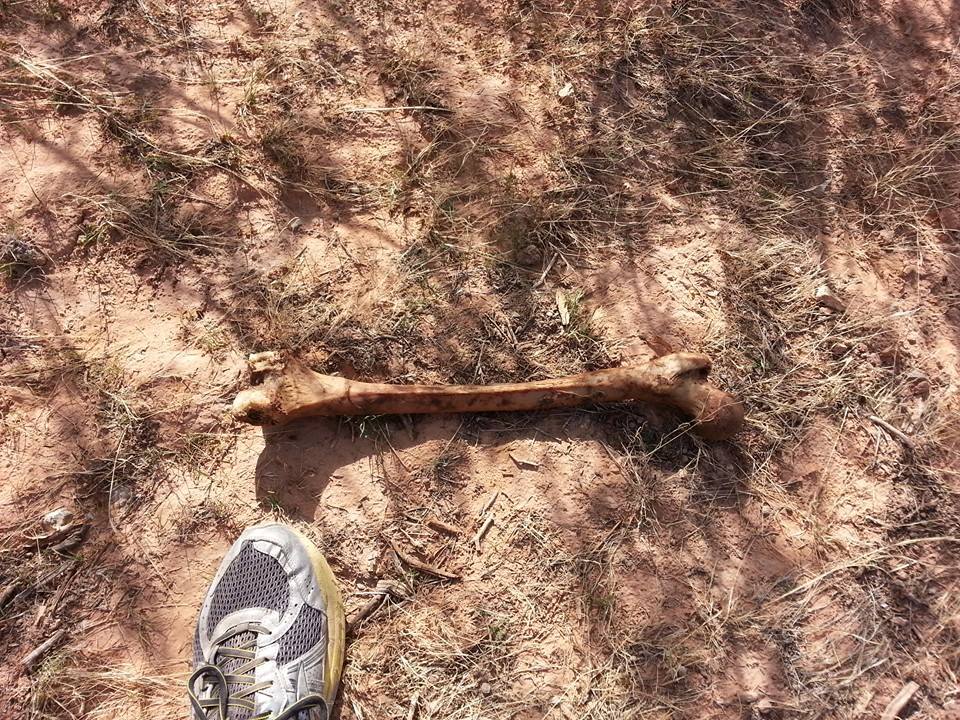
The Boy Scouts from Cedar City stumbled upon the skeletal remains Nov. 15, 2014, during a 20-mile hike on the Arizona Strip. Among the remains were a skull, ribs, vertebrae, femur, arm bone and tailbone. Mohave County Sheriff’s Office responded to the scene at the time.
Read more: Boy Scouts discover human remains on Arizona Strip
Anita Mortensen, public information specialist for the Sheriff’s Office, said the remains were sent for DNA testing, and there have been no matching results from the testing. The investigation is still ongoing.
Cases of unidentified remains can be found on the National Missing and Unidentified Persons System, a national information database also referred to as “NamUs” that allows law enforcement, medical examiners and coroners to share case information of the unidentified, unclaimed and missing. According to NamUs, 4,400 unidentified bodies are recovered each year, and the number of unidentified persons cases varies widely by state.
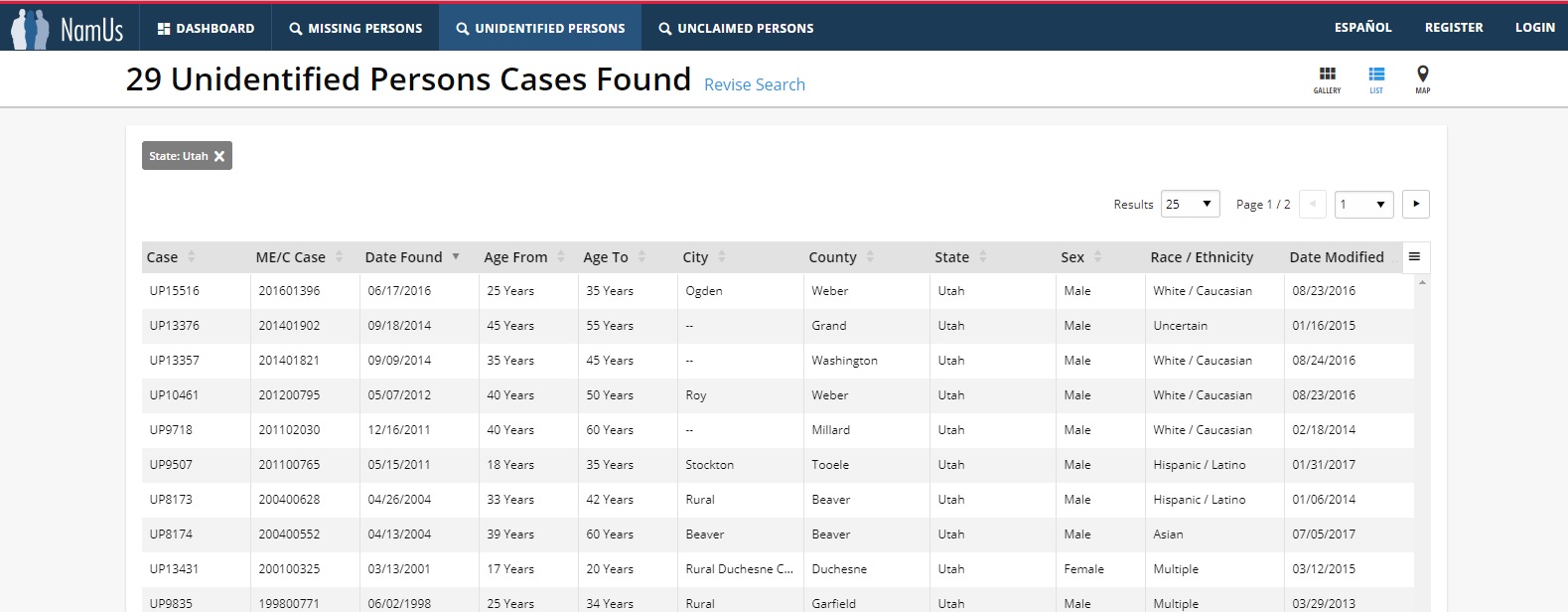
In Arizona, the state where the human remains were found in 2014, there are 1,634 unidentified persons cases on NamUs. In Utah, there are 29, with the oldest case dating back to 1973.
On NamUs, the male human remains found in 2014 are known as case No. 14-1664. The only information provided on who this man might be is his approximate age and hair color and the accessories and clothing found near the remains.
While NamUs can prove useful for law enforcement and medical examiners, there’s usually no law requiring them to use the database. According to the National Institute of Justice, New York was the first state to legislate a mandated use of the system in 2016.
Although the use of NamUs is not mandated in all states, as of July 2018 it has aided in resolving 1,434 unidentified cases.
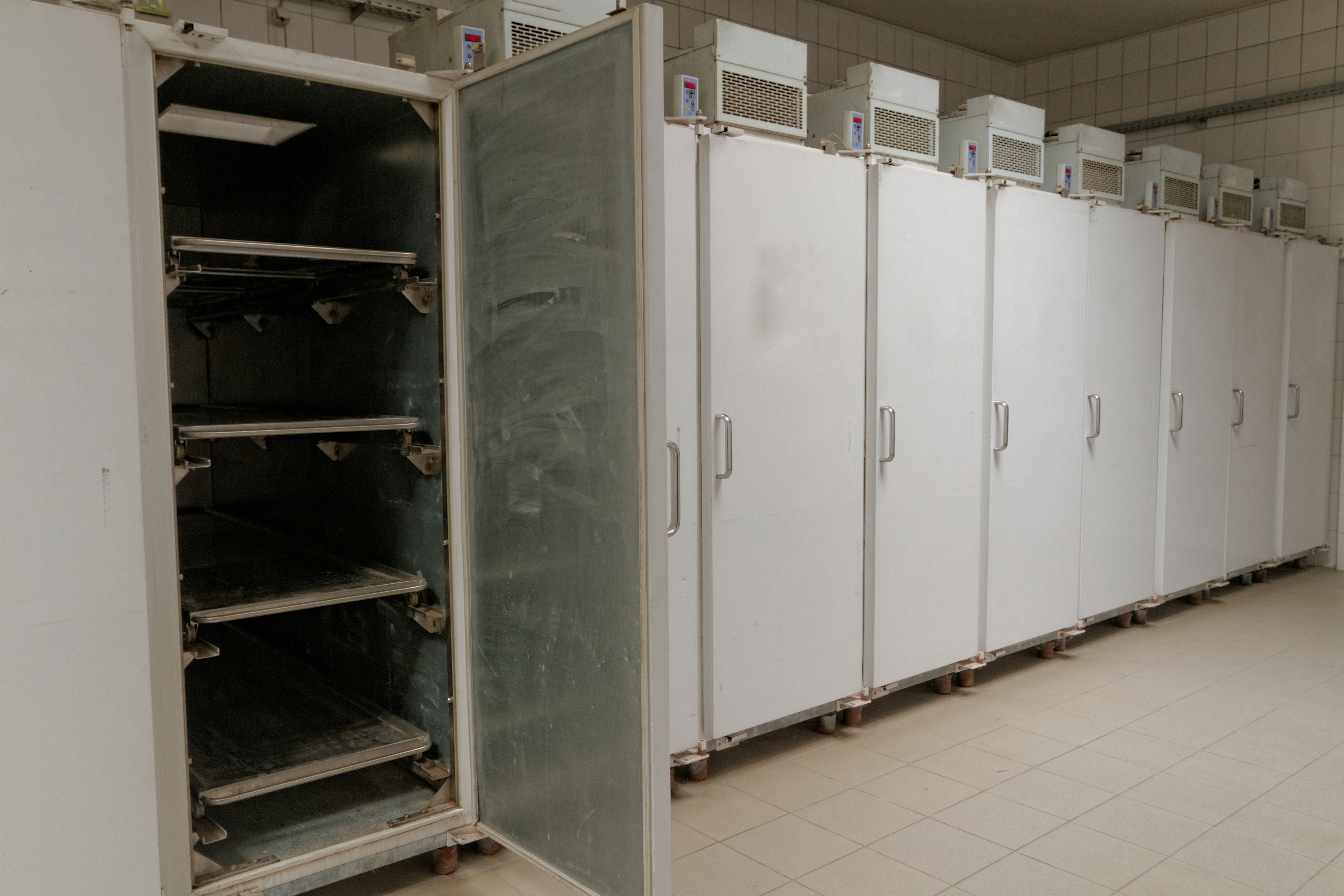
Human remains that end up at the Utah Office of the Medical Examiner stay there until they are identified. Medical examiner Erik Christensen said during his 10 years working at the office, he hasn’t experienced human remains going unidentified for long periods of time.
“It’s unusual for Utah to have long term unidentified bodies,” he said.
Since it’s not possible for medical examiners to do an autopsy on skeletal remains, Christensen said, they will look for unique features on the bones to help identify the remains. This is done with the help of an anthropologist.
When dental records don’t provide any results, physical characteristics that are evident on bones — genetic disorders, diseases and healed fractures — can help identify human remains, according to Investigating Forensics.
Christensen said medical examiners use DNA testing as a last resort because out of all testing, DNA testing can take the longest.
Although NamUs can help law enforcement and medical examiners solve unidentified cases, Christensen said, “there are always some cases that go unidentified.”
To learn more about NamUs and open cases in Utah, visit its website.
Email: mheckenliable@stgnews.com
Twitter: @STGnews | @markeekaenews
Copyright St. George News, SaintGeorgeUtah.com LLC, 2018, all rights reserved.