Lee pushes bill mandating northern corridor in Senate subcommittee
ST. GEORGE – A bill pushed by U.S. Sen. Mike Lee, R-Utah, mandating that a federal agency designate a route for a roadway through the Red Cliffs Desert Reserve was highlighted during a Senate subcommittee hearing Wednesday.
Lee’s bill, S. 3297, the “Washington County, Utah, Public Land Act,” was among many heard before the Senate Energy and Natural Resources subcommittee. The bill was introduced last month and is a companion to similar legislation by U.S. Rep. Chris Stewart, R-Utah. Stewart’s bill passed the House Natural Resource Committee in a 21-14 vote June 6.
Read more: House committee passes bill creating ‘northern corridor’ through tortoise reserve
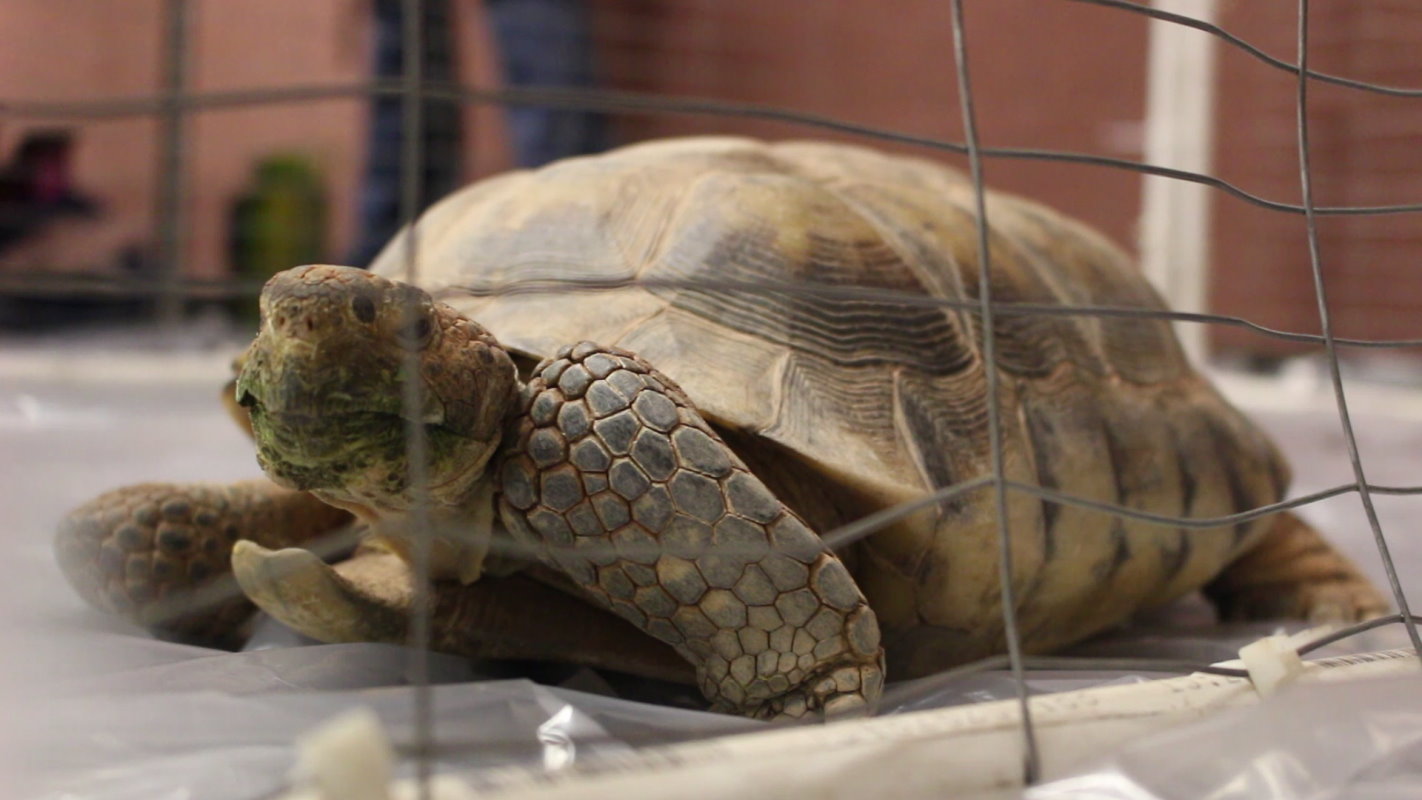
Lee said the bill strikes a balance between the needs Washington County’s rapidly growing population and the protections of the Mohave desert tortoise, which is listed as threatened under the Endangered Species Act.
With that growth comes additional traffic, which makes the northern corridor all the more necessary, according to road planners.
Without the northern corridor, the local transportation system will ultimately fail, state and county road planners have said. Due to the geographical limitations of the area, road planners consider the most viable route for the roadway to be through a part of the Red Cliffs Desert Reserve.
Read more: Planners: Congestion inevitable, but northern corridor would help
The Bureau of Land Management was mandated by Congress to designate a route for the northern corridor as a part of the 2009 Omnibus Public Lands Act, Lee said, adding the BLM was supposed to designate the route within three years of the legislation’s passing.
“Now, almost a decade later, the Department of the Interior has not permitted a transportation route that meets this rapidly growing county’s needs,” Lee said.
Opponents of the northern corridor argue that the BLM was only told to consider the feasibility of a transportation route and had not been mandated to create one.
Lee’s bill would establish a 4-mile long, 300-foot wide route for the northern corridor through the Red Cliffs Desert Reserve. It also allows for continuing utility development along the highway.
Because the roadway cuts through land set aside for the protection of the endangered Mohave desert tortoise, the bill proposes to expand the tortoise habitat by nearly 7,000 acres to mitigate the impact of the road.

Read more: County officials propose legislation to expand tortoise habitat for northern corridor route
The proposed expansion, designated as “Zone 6,” would be created in the area south of Santa Clara and west of Bloomington Hills.
The new roadway would displace between 10 and 20 desert tortoises, Lee said, and called the Zone 6 area prime habitat that would also protect many more desert tortoises found in that area.
The bill would also renew the Washington County’s Habitat Conversation Plan, or HCP for another 25 years. The original HCP was created along with the Red Cliffs Desert Reserve in 1996 and allows the county to oversee management of tortoise habitat in partnership with federal lands and wildlife agencies.
Read more: Habitat Conservation Plan expires after 20 years of protecting tortoises; renewal efforts continue
The original plan expired in 2016 and has been temporarily extended as Washington County officials and federal agencies negotiate a new plan. Among the issues that need to be resolved in order for the plan to move forward to renewal is the northern corridor.
“S. 3297 would be a win for both the county and for the desert tortoise,” Lee said.
During the hearing, Lee asked Christopher McAlear, a BLM representative, why the federal agency hadn’t moved to designate a route for the northern corridor.
“The the BLM is currently working to resolve this issue,” McAlear said. “The administration and (Interior Secretary Ryan Zinke) support getting this infrastructure in place for the county.”
Because the roadway cuts through protected habitat, the BLM and others federal agencies have not been eager to approve it or consider it a viable part of future resource management plans for the Red Cliffs National Conservation Area.

Read more: Letter to the Editor: Washington County commissioners seek to ram through ‘wish list’
Washington County resident Richard Spotts, who has worked for various federal agencies including the BLM, sent a letter to the Senate subcommittee opposing Lee’s bill. In his letter he states it sets a bad precedent to allow congressional edict to circumvent federal protections and regulations.
“If S. 3297 is enacted, it would establish a very dangerous and damaging national precedent. Indeed, this could lead to a plethora of similar county-sponsored bills inundating Congress and asking for the same preferential treatment.”
Spotts further wrote he believes Washington County officials have given more priority to the county’s growth and development over long-standing commitments to the Red Cliffs Desert Reserve and the preservation of the desert tortoise.
The Desert Tortoise Council, a nonprofit group that promotes the conservation of the tortoise, sent a letter opposing the bill to Senate Energy and Natural Resources chairwoman Sen. Lisa Murkowski, R-Arkansas.
“The Council believes that construction of this new highway would create new impacts and threats that cannot be mitigated by enlarging the existing Reserve,” council chairman Edward LeRue wrote.
The road’s impact on the area will not be small, he wrote, claiming it will draw additional predators who are attracted to roadkill, and that there will indirect impacts and degradation to habitat up to 2.5 miles from the roadside.
“The construction of this new highway through the dedicated Reserve will have the adverse effects given above to a population of tortoises that has already undergone a 41 (percent) decline in numbers,” LeRue wrote.
While introduced to the subcommittee Wednesday, Lee’s bill has yet to be voted on.
Resources
- S. 3297, the “Washington County, Utah, Public Land Act,”
- Richard Spott’s letter opposing S. 3297
- Desert Tortoise Council letter opposing S. 3297
Email: mkessler@stgnews.com
Twitter: @MoriKessler
Copyright St. George News, SaintGeorgeUtah.com LLC, 2018, all rights reserved.