In search of buried treasure, boys unearth possible pioneer-era structure in Washington City
WASHINGTON CITY — Deep in the throes of boyhood adventure, 11-year-old Tyrel and 9-year-old Jack were digging a pit to build an underground fort when they discovered what a local historian believes could be a structure built by early settlers of Washington City.

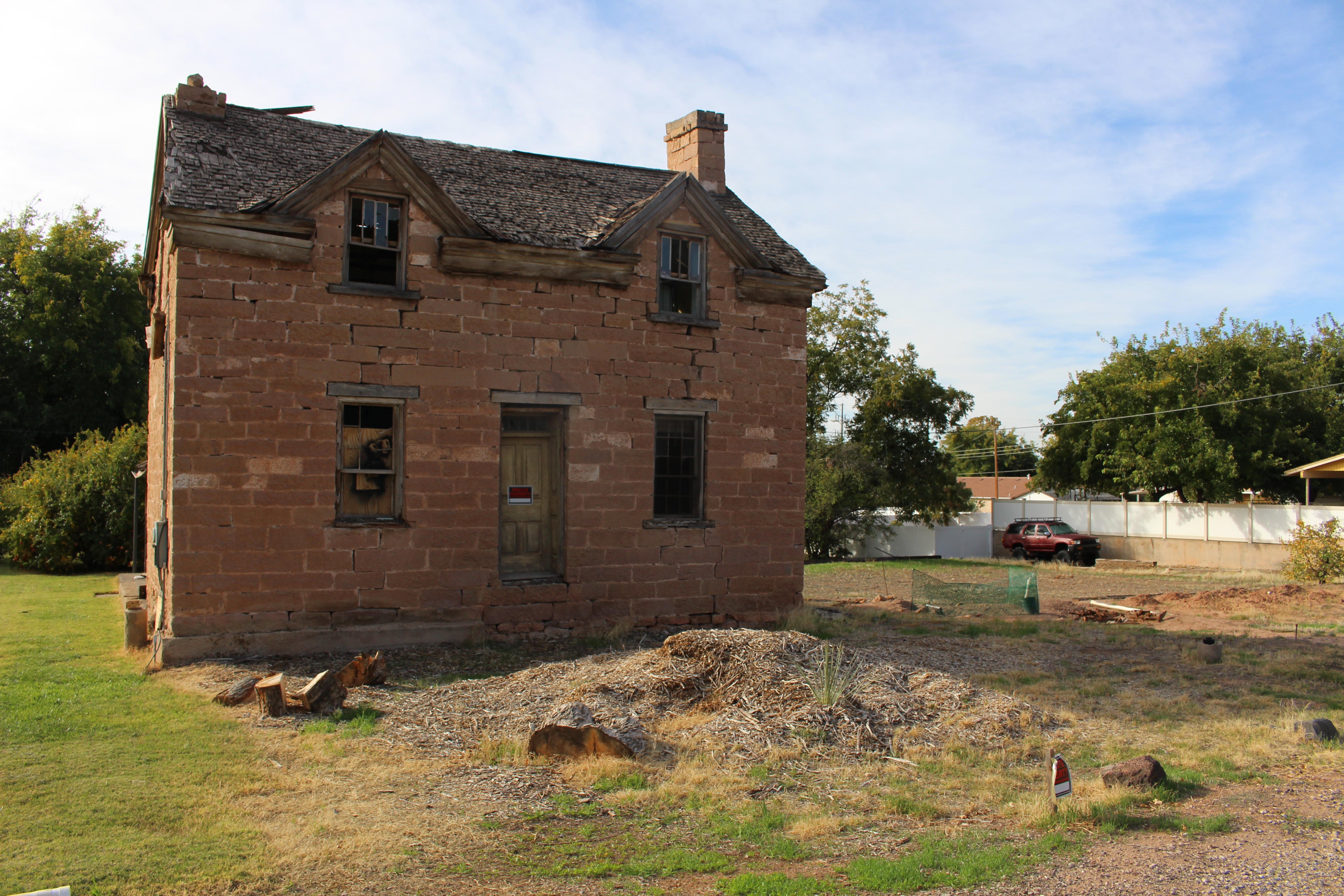
The Hughes brothers were digging next to an old two-story home near the corner of 100 South and 200 East. The home was built with sandstone bricks as Washington City was first being settled in the mid-1800s.
The boys had spent much of their time over their fall break in October and many afternoons since excavating the hole and continuing to burrow deeper in search of more discoveries.
They eventually found what they told St. George News they thought was a well. However, Richard Kohler, president of the Washington County Historical Society, said it more likely was a cesspit for an outhouse, but certain aspects of the hole’s construction seem to point to other possibilities as well.
Digging until rock bottom
The boys started digging the pit in a sunken area of the lot near their home after getting permission from the landowner. They wasted no time using their hands and shovels to dig as deep as they could.
“We wanted to find treasures and build a man fort because we can’t dig in our own backyard,” Tyrel said.
The first things they discovered were rusty metal pieces they thought were parts of an old car or a tractor. As they continued digging deeper, they discovered rocks stacked in a circle around the outside and extending even deeper. They also started finding dozens of shattered pieces of glass, jars and bottles with their lids rusted shut.
“At first, we thought it was a celery,” Jack said. His brother corrected him to “cellar.”
“We now think it’s a well,” Tyrel said.
Whoever first dug the pit and placed the stones around the outside bored through a solid sandstone layer in the earth. The hole is about 6 feet deep right now, but the original pit seems to keep going down.
Lacie Hughes, Tyrel and Jack’s mother, said the boys have run outside and continued their effort digging the hole after coming home from school most days.
“During fall break, they were digging from 10 a.m. to 7:30 p.m. – they didn’t have time to eat lunch,” Lacie Hughes said. “They had all their neighborhood friends come over every now and again, and they’ll dig a hole and then leave, but they’ve stuck in that hole every waking moment they could.”
When the boys found the first unbroken glass bottle, Lacie Hughes said they came running into the house to show her the “buried treasure” they found.
“It’s been good clean fun for those boys,” she said.
A well, outhouse or something else
Kohler called the buried structure “a mystery.” One clue comes in the form of an iron pipe, which leads into the pit from the direction of the sandstone house on the lot.
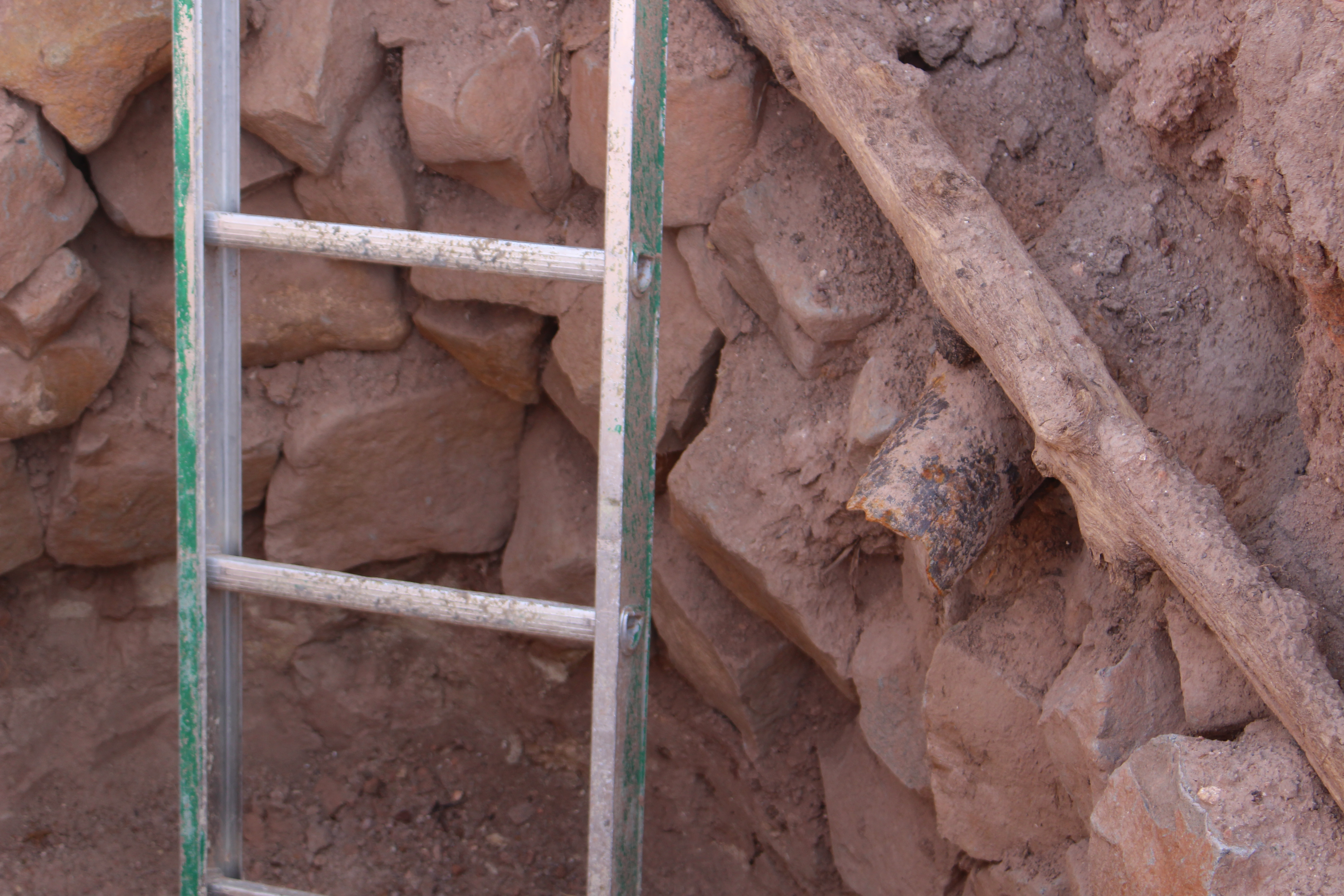
Iron pipes were not introduced in Southern Utah until after the 1920s, Kohler said. The first pipes and indoor plumbing built in the area was in the Dixie Academy building on Main Street in St. George, which is now the St. George Children’s Museum, he said.
“It could have been that this pit was a cesspit for an outhouse in the 1800s, and then over time, when they didn’t need the outhouse and they moved the plumbing outside, they could have added piping to lead into the pit,” Kohler said.
If the pit was once a cesspit for an outhouse, Kohler said it was unusual that such care would be used in placing all of the stones to line the pit. Usually, settlers in the area would just dig a dirt pit for an outhouse. Oftentimes, they wouldn’t even construct a pit under an outhouse; they’d just use a bucket that would be dumped after it got full, Kohler said.
Because the pit goes past the sandstone layer in the ground, it is a possibility that the pit could have been a well at one time, although a well in the area would have also been rare, Kohler said. Ditches brought water from springs to the neighborhood where the home is in Washington City when pioneers first settled the area, so there would be less need for a well to be built, he said.

A post written by Harold Cahoon of the Washington City Historical Society on Washington City’s website also mentioned the ditches that ran through the neighborhoods.
“Drinking water came from the same ditches that cattle rummaged in,” Cahoon wrote on the website. “Each morning between 6 a.m. and 7 a.m., water was dipped from the irrigation ditches for use in their homes. It was known as ‘dip’ water.”
Once the pit had served it’s purpose – whatever that purpose was – Kohler said it would have likely been filled in with dirt until it was discovered decades later.
Tyrel and Jack said they are planning to keep digging until they hit rock bottom and won’t stop excavating the site until they find some solid answers.
“We’re going to keep digging down, down, down,” Jack said. “It’s fun because we haven’t dug a hole in a while.”
Click on photo to enlarge it, then use your left-right arrow keys to cycle through the gallery.

Rusty metal equipment was the first thing Tyrel and Jack Hughes found as they started digging their hole in Washington City, Utah, Oct. 29, 2018 | Photo by Spencer Ricks, St. George News

A sandstone layer in the earth is visible under the stacked stones. The original pit that’s being unearthed by Tyrel and Jack Hughes continues through the sandstone layer in Washington City, Utah, Oct. 29, 2018 | Photo by Spencer Ricks, St. George News

A home built by pioneers in the mid-1800s sits on the lot next to where Tyrel and Jack Hughes found a structure built by stones underground in Washington City, Utah, Oct. 29, 2018 | Photo by Spencer Ricks, St. George News

Shattered pieces of glass, jars, and bottles with rusted lids are displayed after being taken out of a pit dug by Tyrel and Jack Hughes in Washington City, Utah, Oct. 29, 2018 | Photo by Spencer Ricks, St. George News

Tyrel and Jack Hughes dig a hole to unearth what could be a structure built by settlers of Washington City, Utah, Oct. 12, 2018 | Photo courtesy of Lacie Hughes. St. George News

Rocks that could have been part of a structure built by pioneers lines a pit that’s being unearthed by Tyrel and Jack Hughes in Washington City, Utah, Oct. 29, 2018 | Photo by Spencer Ricks, St. George News

Tyrel and Jack Hughes dig a hole to unearth what could be a structure built by settlers of Washington City, Utah, Oct. 12, 2018 | Photo courtesy of Lacie Hughes. St. George News

Rocks that could have been part of a structure built by pioneers line a pit that’s being unearthed by Tyrel and Jack Hughes in Washington City, Utah, Oct. 29, 2018 | Photo by Spencer Ricks, St. George News

A home built by pioneers in the mid-1800s sits on the lot next to where Tyrel and Jack Hughes found a structure built by stones underground in Washington City, Utah, Oct. 29, 2018 | Photo by Spencer Ricks, St. George News

A rusty iron pipe leads into a pit dug by Tyrel and Jack Hughes in Washington City, Utah, Oct. 29, 2018 | Photo by Spencer Ricks, St. George News

Jack (left) and Tyrel Hughes (right) show off some of the glass bottles and jars found in the pit they were digging next to a pioneer-era home in Washington City, Utah, Oct. 28, 2018 | Photo by Spencer Ricks, St. George News
Email: sricks@stgnews.com
Twitter: @STGnews | @SpencerRicks
Copyright St. George News, SaintGeorgeUtah.com LLC, 2018, all rights reserved.